I’ll never forget the first time it happened.
I had settled into Half-Pigeon Pose like I had dozens of times before. The room was quiet except for the soft sound of steady breathing. My front leg was folded beneath me, my back leg stretched long, and I slowly lowered my chest toward the mat. Nothing felt unusual…at first.
Then, without warning, I noticed little dark spots appearing on my yoga mat. It took me a second to realize they were tears.
I wasn’t thinking about anything sad. No difficult memories had suddenly surfaced. I wasn’t in physical pain. But there I was, lying in ardha kapotasana with tears streaming down my face, wondering, Where did that come from?!
The answer isn’t as simple as “we store emotions in our hips,” even though you’ve probably heard that phrase before. The truth is a little more nuanced, and honestly, I think it’s even more fascinating.
The Myth About “Stored Emotions”
Let’s start with the phrase everyone knows: “You store your emotions in your hips.”
It’s catchy, but there isn’t scientific evidence showing that emotions are literally stored inside your hip muscles or connective tissue. That doesn’t mean your experience isn’t real.
What science does tell us is that our bodies and minds are deeply connected. Stress, anxiety, grief, and even joy create real physical changes in the body. We tighten muscles without realizing it. Our breathing becomes shallow. Our posture changes. We brace ourselves against difficult experiences, often without noticing.
Over time, those patterns become familiar.
When we finally slow down enough to notice them, it can feel like emotions are suddenly appearing out of nowhere.
Half-Pigeon Pose Asks You to Be Still
This pose isn’t just a hip stretch. It’s a pause.
Unlike a fast-moving vinyasa sequence where your attention shifts from pose to pose, half-pigeon asks you to settle in. To breathe. To stop distracting yourself with movement.
And that’s where things can get interesting.
Our lives are busy. Most of us spend our days solving problems, checking notifications, running errands, working, caring for others, and moving from one task to the next. Stillness isn’t something we practice very often.
When everything finally gets quiet, our minds sometimes have room to catch up with our bodies.
Your Nervous System Plays a Bigger Role Than You Think
One reason emotions may surface during yoga has less to do with your hips and more to do with your nervous system.
Slow breathing and mindful movement can help shift the body away from a constant state of stress and toward a more relaxed state. Researchers have found that slow, controlled breathing can influence the autonomic nervous system, improving emotional regulation and reducing stress responses.
When your body begins to feel safe enough to relax, emotions that you’ve been unknowingly carrying may become easier to notice.
That doesn’t necessarily mean yoga caused the emotions. It may have simply created enough space for you to feel them.
Sometimes Tears Don’t Need an Explanation
One of the biggest lessons yoga has taught me is that not everything needs to be analyzed.
Sometimes we cry because we’re grieving. Sometimes we cry because we’re exhausted. Sometimes we cry because we’ve finally stopped holding everything together for five whole minutes. And sometimes we cry for reasons we may never fully understand.
I’ve learned not to treat those moments as something that’s “wrong.” Instead, I see them as information.
My body is telling me something deserves my attention.
What If It Happens to You?
First, don’t panic. You’re not broken. You’re not doing yoga incorrectly.
And you definitely aren’t the only person who has wiped away tears before Savasana.
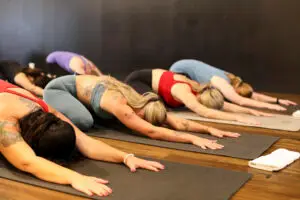
If emotions come up during Pigeon Pose, try resisting the urge to judge yourself. Stay with your breath if it feels comfortable. If the pose becomes overwhelming, gently come out of it and rest in Child’s Pose or on your back.
Yoga is never about forcing yourself to stay in discomfort.
It’s about learning to listen.
The Real Gift of Half-Pigeon Pose
Looking back, I don’t remember exactly why I cried that day.
What I remember is what happened afterward.
I felt lighter.
Not because all of my problems disappeared, but because for a few quiet moments, I had stopped trying to outrun them.
This pose reminded me that yoga isn’t just about becoming more flexible.
It’s about becoming more aware.
Some days that awareness shows up as strength.
Some days it shows up as peace.
And every once in a while, it shows up as tears falling silently onto your yoga mat.
Maybe that’s not something to fear.
Maybe it’s simply another way our bodies remind us that healing doesn’t always look the way we expect it to.